HOME pMineR & pMinShiny REFERENCES CONTACT
From Radiomics to Dosiomics: Patterns, Tools and Challenges

July 7, AIME 2026 Ottawa, Canada

Radiomics

Starting around 2012, the need for diagnostic and prognostic predictive models based on radiological and nuclear medicine imaging provided the fertile ground for the emergence of the field known as Radiomics. Since then, Radiomics has evolved while continuously addressing several critical aspects, including: In addition to increasing maturity across these areas, Radiomics is also expanding beyond traditional radiology departments, moving toward technologically related domains such as radiation therapy. Here, the integration of Radiomics with theragnomics appears to provide a solid foundation for the emergence of a new discipline: Dosiomics.

The TUTORIAL

This tutorial is meant to be a general introduction to the main concepts and challenges behind radiomics and dosomics. On first, we will introduce theaudience to several key topics in Radiomics, including: the characteristics of data source standards, the concept of imaging biomarkers, the typical analytical pipeline of Hand-Crafted Radiomics (with a hands-on example), and the open challenges in the current state of the field (both technical and clinical) . Subsequently, we will present the clinical rationale underlying the emerging concept of Dosiomics and introduce a technological approach (with a hands-on session), highlighting its potential as well as its limitations. Finally, the tutorial will encourage the participants to share their experience, visions and establish a channel for future cooperation among participants in these exciting fields


Frontal Modules (1st round)


Round Table with invited speakers

Frontal Modules (2nd round)

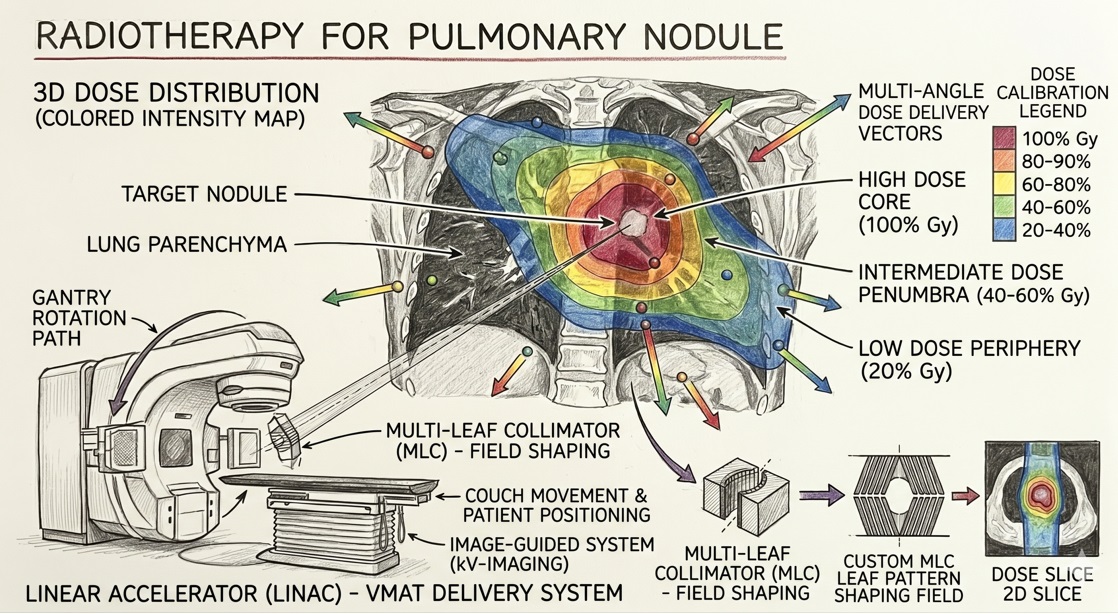
  • How Radiotherapy works : a gentle introduction to Radiation therapy
  • From radiomics to dosiomics : the problem, the idea, the vision
  • Hand Crafted RAdiomics a gentle introduction to the field: from the concept of imaging biomarkers to hand-crafted features, feature selection strategies, machine learning modeling, and model validation. Best practices: TRIPOD, IBSI, etc.
  • Tutorial: MV4Dose short hands-on session with an example of a dosiomics analysis tool
  • Challenges ahead : organ modelling, adaptive RT, DICOM dialets, ...

frontal lectures

60%

Real-world use cases, presented by invited speakers

20%

Round Table, interactive open discussion

20%
Tutorial Organizers

Photo of Me Photo of Me Photo of Me Photo of Me
Department of Statistics, Computer Science and Mathematics, Public University of Navarre, Pamplona (ES) Department of Statistics, Computer Science and Mathematics, Public University of Navarre, Pamplona (ES) Department of Radiation Oncology, Hospital Universitario de Navarra, Pamplona (ES) Department of Clinical and Experimental Sciences, University of Brescia (IT)

Invited remote speakers

Nicola Dinapoli
Fondazione Policlinico Universitario A. Gemelli IRCCS (IT)
Francesco Olivato
Dipartimento di Scienze Cliniche e Sperimentali, Università degli Studi di Brescia (IT)
Marco Ravanelli
Dipartimento di Specialità Medico-Chirurgiche, Scienze Radiologiche e Sanità Pubblica, Università degli Studi di Brescia (IT)

Onsite Tutorial Chair

Photo of Me unibs
Department of Clinical and Experimental Sciences, Università degli Studi di Brescia (IT)

Selected References
  • De Bari B, Lefevre L, Henriques J, et al. Could 18-FDG PET-CT Radiomic Features Predict the Locoregional Progression-Free Survival in Inoperable or Unresectable Oesophageal Cancer? Cancers (Basel). 2022 Aug 22;14(16):4043. doi: 10.3390/cancers14164043. PMID: 36011035; PMCID: PMC9406583.
  • Albano D, Gatta R, Marini M, et al. Role of 18F-FDG PET/CT Radiomics Features in the Differential Diagnosis of Solitary Pulmonary Nodules: Diagnostic Accuracy and Comparison between Two Different PET/CT Scanners. J Clin Med. 2021 Oct 29;10(21):5064. doi: 10.3390/jcm10215064. PMID: 34768584; PMCID: PMC8584460.
  • Cusumano D, Meijer G, Lenkowicz J, et al. A field strength independent MR radiomics model to predict pathological complete response in locally advanced rectal cancer. Radiol Med. 2021 Mar;126(3):421-429. doi: 10.1007/s11547-020-01266-z. Epub 2020 Aug 24. PMID: 32833198; PMCID: PMC7937600.
  • Gatta R, Depeursinge A, Ratib O, et al. Integrating radiomics into holomics for personalised oncology: from algorithms to bedside. Eur Radiol Exp. 2020 Feb 7;4(1):11. doi: 10.1186/s41747-019-0143-0. PMID: 32034573; PMCID: PMC7007467.
  • Zwanenburg A, Vallières M, Abdalah MA, et al. The Image Biomarker Standardization Initiative: Standardized Quantitative Radiomics for High-Throughput Image-based Phenotyping. Radiology. 2020 May;295(2):328-338. doi: 10.1148/radiol.2020191145. Epub 2020 Mar 10. PMID: 32154773; PMCID: PMC7193906.
  • Gatta R, Vallati M, Dinapoli N, et al. Towards a modular decision support system for radiomics: A case study on rectal cancer, Artificial Intelligence in Medicine, Volume 96, 2019, Pages 145-153
  • Dinapoli N, Barbaro B, Gatta R, et al. Magnetic Resonance, Vendor-independent, Intensity Histogram Analysis Predicting Pathologic Complete Response After Radiochemotherapy of Rectal Cancer. Int J Radiat Oncol Biol Phys. 2018 Nov 15;102(4):765-774. doi: 10.1016/j.ijrobp.2018.04.065. Epub 2018 May 4. PMID: 29891200.
  • Cusumano D, Dinapoli N, Boldrini L, et al. Fractal-based radiomic approach to predict complete pathological response after chemo-radiotherapy in rectal cancer. Radiol Med. 2018 Apr;123(4):286-295. doi: 10.1007/s11547-017-0838-3. Epub 2017 Dec 11. PMID: 29230678.
  • Dinapoli, N., Casà, C., Barbaro, B., et al. Radiomics for rectal cancer. Translational cancer research, 5, 424-431.
  • Dinapoli N, Alitto AR, Vallati M, et al. Moddicom: a complete and easily accessible library for prognostic evaluations relying on image features. Annu Int Conf IEEE Eng Med Biol Soc. 2015 Aug;2015:771-4. doi: 10.1109/EMBC.2015.7318476. PMID: 26736376.
CONTACT
Planet Earth
Email: roberto.gatta@unibs.it

Swing by for a cup of :)